












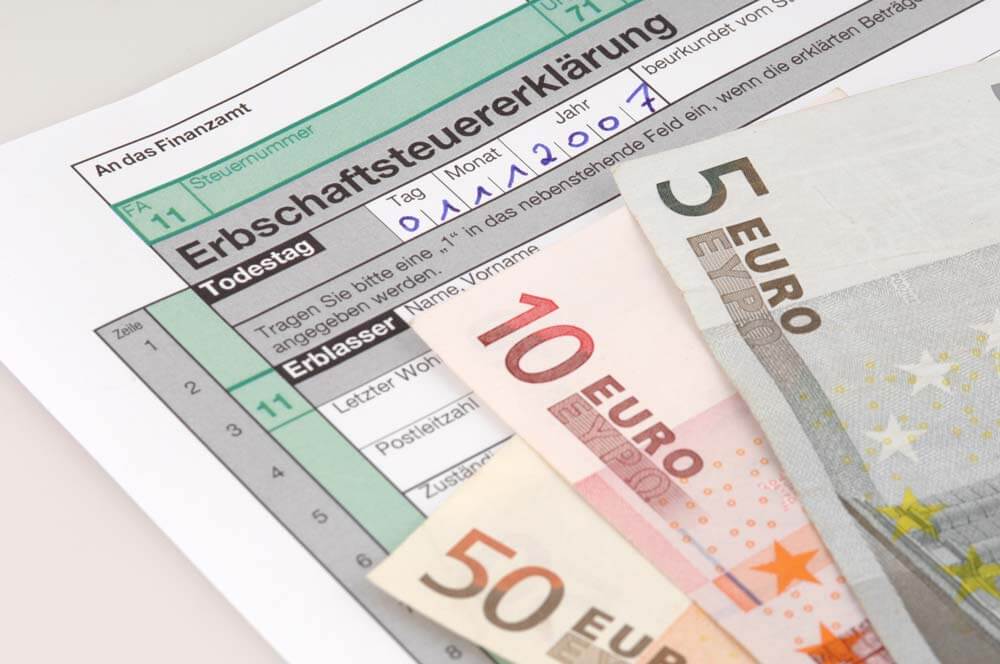



Find out how inheritance tax is calculated, which allowances apply and what special features exist for property transfers.
Basics of inheritance tax
Anyone who inherits assets such as property, money or other possessions in Germany generally has to pay inheritance tax. This tax is incurred in order for the state to participate in the transfer of assets. The amount of inheritance tax depends on several factors, in particular the relationship to the deceased and the value of the inherited assets. The exact legal regulations can be found in the Inheritance and Gift Tax Act (ErbStG) which regulates the calculation and the allowances.
How is inheritance tax calculated?
Inheritance tax is divided into three different tax brackets depending on the relationship to the deceased. The closer the relationship, the higher the tax-free amount and the lower the tax burden. There are three tax brackets:
- Tax class I: Spouses, registered partners, children, grandchildren (if the testator's parents are already deceased) and parents of minor children. This group has the highest tax-free allowances and the lowest tax rates.
- Tax class II: Grandchildren, children-in-law, siblings, nephews and nieces. They have lower tax-free allowances and higher tax rates than tax class I.
- Tax class III: All other persons, such as friends, distant relatives or non-relatives, who also have to pay tax on inherited assets. This group has the lowest tax-free allowances and the highest tax rates.
Allowances and tax allowances
The amount of inheritance tax is influenced by the allowances, which vary depending on the tax bracket. Some examples of the allowances are
- Spouse: Up to 500,000 euros tax-free.
- Children: Up to 400,000 euros tax-free.
- Grandchildren: Up to 200,000 euros tax-free.
- Friends and distant relatives: Only up to 20,000 euros tax-free.
As soon as the value of the inherited assets exceeds the respective tax-free amount, tax is levied on the excess amount. The tax rate increases depending on the value of the inheritance and the tax bracket.
How high is the tax rate?
The tax rate varies depending on the amount of the inherited assets and the tax class. In tax class I, the tax rate starts at 7 % and can be up to 30 %, depending on the value of the inheritance. In tax brackets II and III, the tax rates are significantly higher, starting at 15 % and capping at 50 % for particularly large inheritances.
Special regulations for real estate
There are special tax regulations for the inheritance of real estate. The market value of the property at the time of inheritance is used to calculate the inheritance tax. In some cases, however, tax concessions such as the so-called „exemption discount“ for owner-occupied properties can also be applied to reduce the tax burden.
Conclusion: Inheritance tax can be a considerable burden, especially for large assets. Early planning and advice, particularly with regard to tax allowances and tax rates, can help to minimise the tax burden. It is advisable to consult a tax advisor or lawyer at an early stage in order to optimise the tax implications of the inheritance and, if necessary, to optimise the transfer of assets through gifts or other measures.
Allowances according to degree of relationship
The amount of the tax-free allowance depends on the relationship to the deceased. The closer the relationship, the higher the tax-free amount. This means that
- Spouse: Up to 500,000 euros can be inherited tax-free.
- Children and stepchildren: Up to 400,000 euros tax-free from each parent.
- Grandchildren: Up to 200,000 euros tax-free if the parents are already deceased.
- Other relatives or cohabitants: The tax-free amount is only 20,000 euros.
Example: Tax burden for property inheritance
An example shows how inheritance tax is calculated for real estate:
- A child inherits a house with a market value of 550,000 euros.
- Tax-free allowance for children: 400,000 euros.
- Taxable amount: 150,000 euros.
- tax rate (tax class 1): 11 %.
- Tax due: 16,500 euros.
If the tax burden cannot be paid immediately, it is often possible to agree an instalment payment with the tax office.
Notification obligation and deadlines
Heirs are obliged to declare the inherited assets to the tax office within three months of the deceased's death. The tax authorities are often informed by other bodies, including
- Registry offices: They automatically report deaths to the tax office.
- Notaries: Notarisation of wills or inheritance contracts are forwarded.
- Banks and insurance companies: These inform the tax authorities about accounts or contracts of deceased persons.
Special features of real estate
Special rules apply to the inheritance of real estate:
- Spouse or registered partner: No inheritance tax if you use the property yourself and do not sell or let it for ten years.
- Children: Tax exemption for living space of up to 200 square metres.
- Other heirs: No tax advantages for property.
Conclusion
Inheritance tax is a complex topic, especially when it comes to real estate. Allowances, tax brackets and special regulations are crucial. Professional advice helps to minimise the tax burden and avoid mistakes.
Would you like to know what your inherited property is worth? Contact us - we can help you.