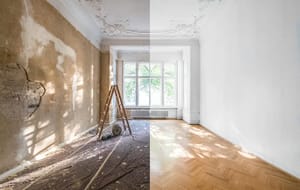
















Housing construction on the up: Why rising building permits now bring hope for homeowners
Nach Monaten gedämpfter Bautätigkeit ziehen die""" Building permits for residential construction on again. For owners, this is more than a footnote: a growing pipeline of permits signals that additional housing will come onto the market in 12-24 months. This shifts expectations and creates windows of opportunity now – for selling, renting, or targeted modernisation.
What matters is the correct assessment: A building permit is not yet construction, but it shows that financing has been checked, land secured, and plans are concrete. In short: the market is preparing new supply. Those who own property today can use this lead time strategically.
What do rising building permits mean specifically?
Building permits act as a leading indicator. They provide information about future offer, not about today's availability. From experience, projects take several quarters from approval to completion. During this phase, buyers, tenants and financiers are already reacting: project developers adjust prices, banks calculate risks, and those searching broaden their options. In summary, this creates a market with slightly more freedom of choice – good for owners who proceed with careful planning.
Why it helps owners
- Stable pricing: More new build announcements ease the pressure on extreme price hikes. This encourages realistic, better-justified asking prices for existing properties.
- Better comparability New builds provide transparent references for energy efficiency, floor plans, and furnishings. Owners can specifically differentiate their property from these (e.g., larger balconies, established neighbourhood, lower property management fees).
- Predictable demand Tenants orient themselves early. Those who rent out now can target specific groups more precisely (singles, families, remote workers) and stagger rental periods.
- Modernisation with direction The benchmark for Energy efficiency increases. Improvements to insulation, heating, or windows have a greater impact on rental suitability and sale price.
Modernisation of heating and insulation: €20,000 cost.
Expected cold rent increase: +€1.50 per m² for 80 m² = €120 per month = €1,440 annually.
Payback: €20,000 / €1,440 ≈ 13.9 years.
Added benefit: lower vacancy risks due to improved energy efficiency rating.
Understanding regional differences and time lag
Permits tend to concentrate in metropolitan regions and fast-growing medium-sized towns. In peripheral locations, construction activity may pick up more slowly. Therefore, owners should check locally whether new projects represent genuine competition or enhance the location overall (infrastructure, micro-location, image). Furthermore: Delay – even with rising approvals, construction costs, capacities or supply chains delay the start. Those who sell today meet buyers who already tomorrow to price in – without the new offer being physically available yet.
Practical tips for owners – act now
- Refresh location analysis Check current comparative offers (new build/existing, energy classes, m² prices). Clearly highlight the strengths of your property: light, location, layout logic, running costs.
- Prioritise quick energy wins Seals, hydraulic balancing, smart thermostats, hot water preparation. Low investment, quick impact on ancillary costs and marketing.
- Dripfeeding rental strategy Schedule runtimes so that they do not expire simultaneously with large new construction completions. Option: indexed or staggered rent (implement legally).
- Check financing: Fixed-rate periods, special repayments, follow-on financing. Use your room for manoeuvre before more supply strengthens buyers' negotiating power.
- Sales preparation: Complete documentation (declaration of division, minutes, energy performance certificate, proof of maintenance). Complete dossiers increase closing rates and shorten marketing times.
- Staging Daylight, neutral colours, minor repairs. Professional photography and floor plan redesigns create differentiation from new-build renderings.
Comparable sales: €4,600–€4,900/m². Your flat: 78 m², good condition, Energy Performance Certificate C.
Target corridor: 78 × €4,700 = €366,600 (base).
Price adjustments: +€1,510 for a south-facing balcony, −€2,100 for no parking space → approx. €361,000–€372,000.
You should also check the gross initial yield: annual rent / purchase price ≥ 3.5–4.01% (depending on market conditions).
Typical mistakes - and how to avoid them
Error 1: To see the new build as purely a price-cutter. Solution: Use new build as an argumentation framework: your existing property often scores points with its location, building community, and established costs – document this clearly.
Error 2: Wait and see without a plan. Solution: A rental „bridging“ can be sensible – but with a clear holding period, maintenance plan, and exit window before major completion waves.
Error 3: Postpone energy issues. Solution: Even small efficiency steps improve ad visibility and the creditworthiness of prospective buyers; large measures should be checked for eligibility for subsidies (federal/state/local authorities).
Error 4: Incomplete documentation. Solution: Create digital files: Energy performance certificate, operating cost overview, maintenance reserve fund, building and modernisation records, floor plans.
Conclusion: Setting the course now – with market intuition and a plan
Rising building permits are a sign of hope – not because everything will become cheaper tomorrow, but because the market is becoming more predictable. Owners who create transparency today, address energy efficiency, and align their strategy with regional project pipelines will achieve the best results in the coming quarters – both for sales and rentals.