
















Heat Transition 2025: How new renovation obligations will shake up the property market
The heating transition will gain new momentum in 2025. For owners, buyers, and investors, renovation obligations and efficiency requirements will become central to every transaction. The background to this is the modernised Building Energy Act (GEG), rising CO2 prices in the building sector, and stricter expectations from banks and tenants regarding energy efficiency. Those who act strategically now will reduce risks, increase property value, and shorten marketing times.
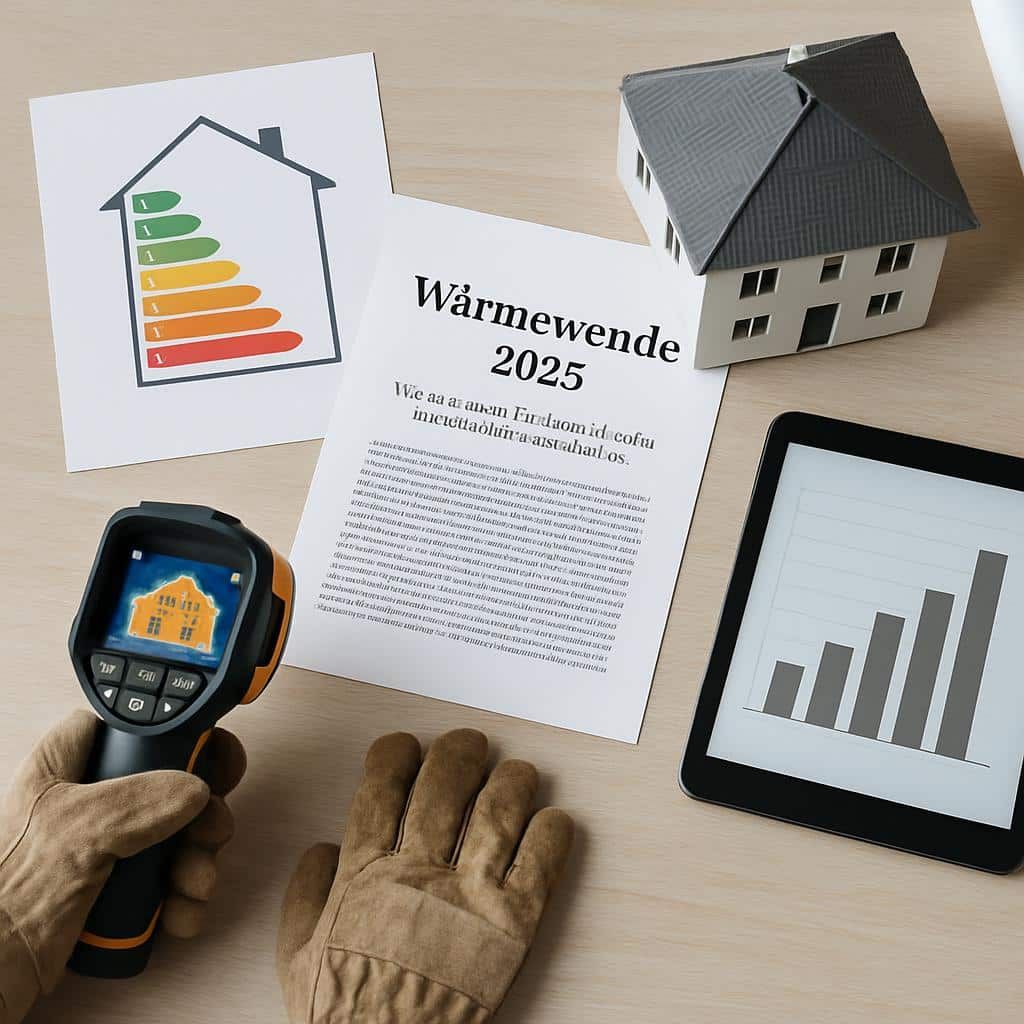
What exactly is changing in 2025?
- 65% – Renewable energy options when replacing your heating system: In local authorities that have adopted a heating plan, the GEG’s 65% rule applies on a phased basis when replacing old heating systems (exceptions and transitional periods may apply). It already applies in new development areas.
- Obligation to replace old installations: Many constant-temperature gas and oil boilers that are older than 30 years need to be replaced (exceptions, for example, for condensing/low-temperature technology and for specific personal use).
- Existing retrofitting obligations The insulation of the top floor ceiling remains mandatory if it is uninsulated and accessible. When components are replaced (windows, facade, roof), the respective GEG limit values must be complied with.
- CO2 price drives operating costs: The national CO2 price is increasing (assumption: approx. €55/t in 2025). This burdens inefficient buildings and increases the pressure for modernisation.
- Energy performance certificates move into focus: Poor classes (E-H) are increasingly leading to price reductions, longer marketing times, and stricter inspections by lenders.
- Landlord and Tenant Law and Refinancing The modernisation levy (currently up to 81% of costs eligible for subsidy, subject to capping limits) remains a key component of refinancing; investors are calculating CAPEX and rental income more closely.
Pricing: Why efficiency classes are now hard facts
Clear patterns are emerging in the market: flats and houses with good energy ratings (A–C) are achieving significant premiums, while unrenovated properties are seeing discounts. Banks are pricing risks more strongly; „green“ loans with better terms are more easily accessible for renovated properties. Buyers are no longer just calculating location and condition for the future, but also a Remediation plan including timeline and funding rate.
Quick Check 2025 (simplified calculation example)
Terraced house, 120 m², energy class E, gas heating 25 years old.
Heat pump including ancillary costs: €30,000; building envelope measures (selective): €12,000.
Funding (based on BEG/BAFA 2025): Heating systems up to 30–50% depending on criteria; energy efficiency measures up to 15–20% (check programmes/budgetary situation). Net investment: approx. €24,000–31,000.
Energy savings: €1,200–1,800 per annum (depending on tariff/CO₂ price); potential for increased property value: +3–81% possible with high-quality workmanship and verifiable results. Conclusion: The renovation pays for itself in part through Market value + operating costs in 8–14 years.
Opportunities for Owners: Increasing Value Instead of Waiting
- Strategic heating replacement: First, check the local heat plan. Is a district heating connection realistic? If not, dimension a heat pump + buffer tank if necessary at an early stage.
- Swift completion of duty Insulate the top floor ceiling, insulate pipes in the unheated area, carry out hydraulic balancing and implement high-efficiency pumps.
- Combine load management Photovoltaic system, heat pump, storage and smart control interconnected – reduces operating costs and improves energy performance certificate values.
- Secure funding: Adhere to the order (application before order), check combinable funding pots (BAFA/KfW, possibly local bonuses); observe deadlines and budget.
- Provide evidence Collection of remediation plans (iSFP), specialist contractor declarations, measurement protocols and invoices – essential for sales, financing and rentals.
Typical errors & solutions
Error: Replace heating without building concept Solution: First calculate heat load, check insulation potential, then choose system.
Error: Grant applied for too late Solution: Submit applications before commissioning; consider the iSFP bonus.
Error: The efficiency rating remains implausible Solution: Update energy performance certificate, document measured values, explain consumption vs. demand.
Funding and Support 2025 at a Glance
The Federal Funding for Efficient Buildings (BEG) remains the core of heating and efficiency funding. For replacing heating systems (e.g. heat pumps), high grants are possible – depending on income, speed, and starting situation. In addition, low-interest KfW loans can be considered. Important: The programmes are subject to budgetary resources; conditions can change (assumption: the basic structure will remain in place in 2025, details will vary).
Investors also consider refinancing through rental income. The modernisation levy is linked to capping limits and formal requirements; clear documentation of eligible costs is mandatory. In sales, the market rewards transparency CAPEX and OPEX NarrativeWhat was invested? What saving is realistic? What remaining measures are scheduled when?
Buyer Strategy: Careful Energy Due Diligence
- Energy performance certificate sample Validate the energy performance certificate with building and system data; take usage effects into account for consumption-based certificates.
- Check the refurbishment plan Which obligations apply and when (heating, insulation, windows)? Are there transitional or hardship provisions?
- Calculate CAPEX reserve: For single-family homes, conservatively budget €300–€500/m² for efficiency packages; coordinate the schedule with tradesperson availability.
- Compare bank conditions. „Take advantage of “Green Mortgage" products with interest advantages if the target efficiency class is achievable.
- Negotiate the price fairly Provide evidence of the need for renovation with reliable quotes/subsidy rates; apply realistic deductions, not flat-rate ones.
Conclusion: By 2025, the market will differentiate more clearly between „fit for the heating transition“ and „in need of renovation“. Owners with a clear strategy and clean documentation will benefit twice over – through lower operating costs and better marketability. Buyers who take energy due diligence seriously will secure solid values and planning certainty.
Act now: Free initial assessment & marketing strategy
We examine energy performance certificates, renovation obligations, and funding opportunities, and show how you can increase market value and speed of sale.
Note: Legal requirements and funding programmes can change. This post is based on the situation at the beginning of 2025 and reasoned assumptions (e.g. CO2 price). We recommend an object-specific review before making decisions.