













Video surveillance row in a block of flats: When cameras provide security – and when they are banned
CCTV in blocks of flats is a sensitive issue, balancing the need for security against privacy. Whether in the stairwell, at the building entrance or in the underground car park – even a lens that is incorrectly positioned can trigger disputes. This article examines when cameras are legally permissible in residential complexes, where the clear boundaries lie, and how owners, property managers and landlords can proceed in a way that is sound in practice.
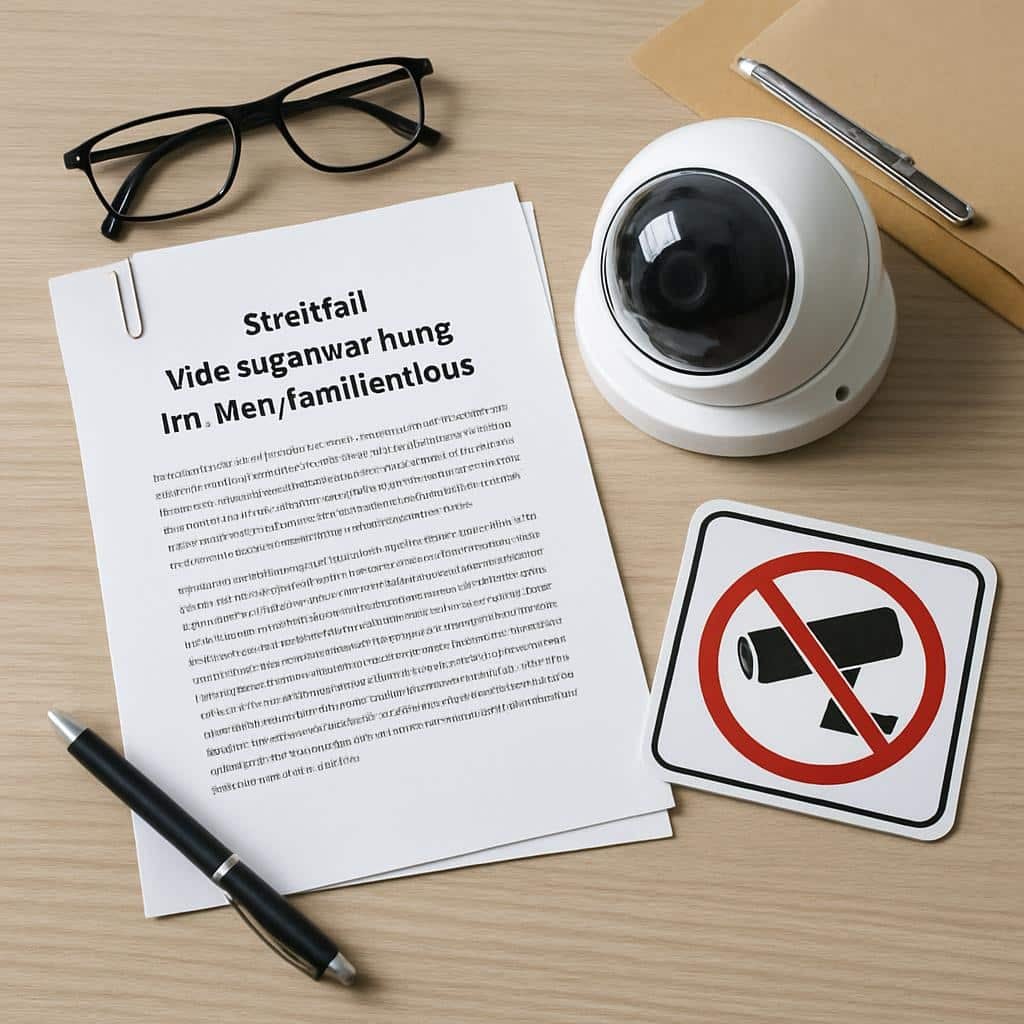
Principle: Security, yes – but only on a legitimate legal basis
CCTV surveillance in communal areas of a block of flats may be permitted if a legitimate interest has occurred (e.g. proven cases of burglary, vandalism, damage to property) and the measure required, relatively and minimal use of data is designed.
Key guidelines:
- Purpose document: identify specific incidents or risks; no „sweeping surveillance“.
- Transparency Provide: clearly visible information signs stating the person responsible and their contact details.
- Data minimisation: Choose a tight camera angle (no neighbouring properties, no front-facing flat doors).
- Short retention period: in practice, usually 48–72 hours; only longer where there is a valid reason.
- No audio recording: Sound is often inadmissible and particularly sensitive.
Where cameras are useful – and under what conditions
Building entrance, underground car park, bicycle or cellar access are typical problem areas. It may be permissible to New entries and Access routes The system should be narrowly focused – used solely for deterrence and to secure evidence in the event of criminal offences. Public footpaths should only be monitored where absolutely unavoidable and only at the very edges; it is preferable to use covers, masking or private zones that block out the area outside the property.
Example: Following three documented break-ins at the cellar within two months, the property management company is having two cameras installed at the rear entrance, each with 72 hours’ recording capacity, no audio, clearly marked signage and verified access restrictions. Mitigating alternatives (additional lighting, locking system) had previously been assessed and, in some cases, implemented.
When video surveillance is not permitted
Surveillance is not permitted in places where residents have a reasonable expectation of privacy – or where the level of surveillance is disproportionately high.
- Stairwells and corridors are particularly sensitive: continuous, widespread surveillance is generally disproportionate.
- Surveillance of front doors, letterboxes or balconies is off-limits.
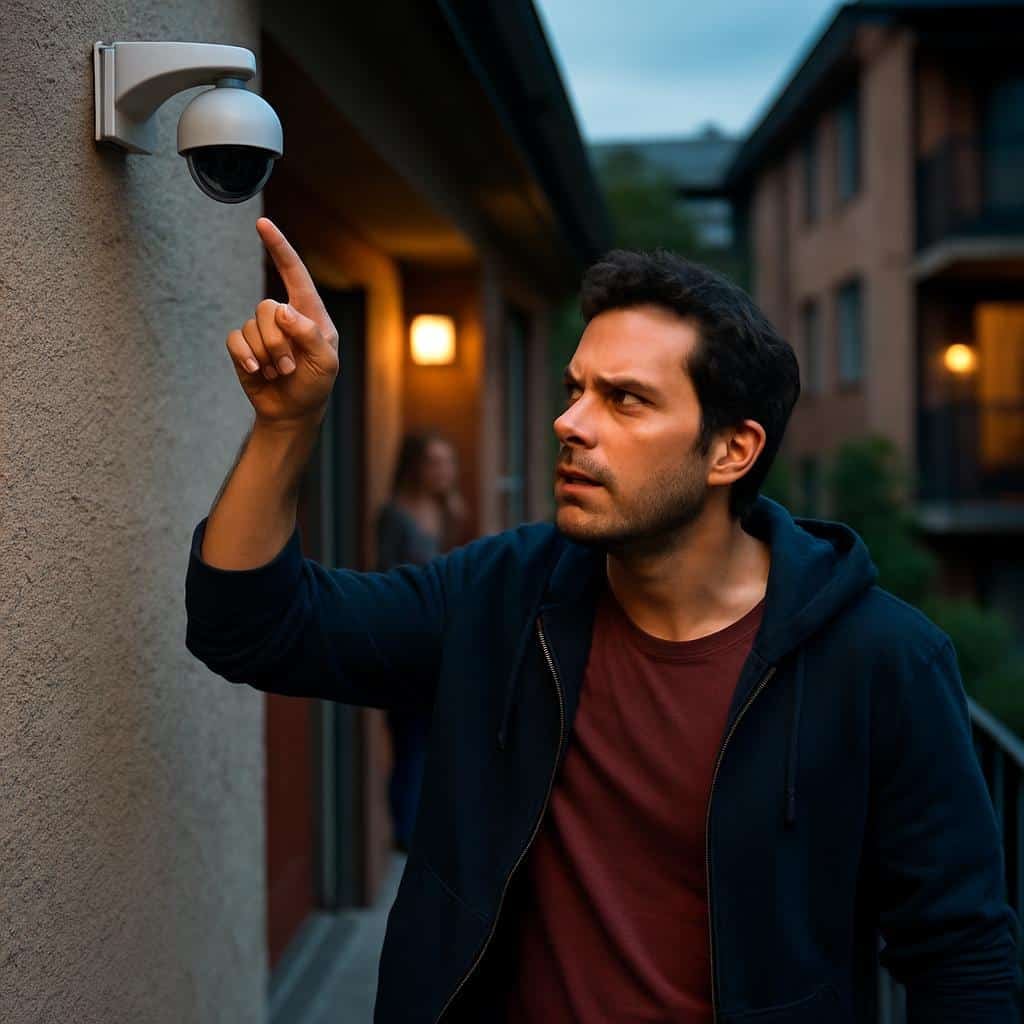
- Private cameras belonging to individual tenants On balconies or in corridors, where communal areas are involved, this is generally not permitted – even Dummies may be prohibited on the grounds of deterrence.
- Audio recordings are practically always excluded in a domestic context.
The Owners’ Association, the landlord, the tenant: who decides?
In the Homeowners’ Association (WEG) The installation of a video system requires a proper resolution. In addition to technical issues, the resolution should a data protection-compliant approach Includes: purpose, location, retention period, data controller, access rights, review interval.
In the Apartment block The owner may install cameras in communal areas provided there is a sound legal basis and the measures are proportionate. Tenants have the right to object if their rights are disproportionately affected.
Tenant In principle, you are allowed to use communal areas not monitor. Video doorbells that continuously record the hallway or neighbours’ properties are problematic. Pure live viewing without recording and without capturing areas belonging to others may be less of a concern, depending on the system – the specific technology used is key here.
Quick check: Is it OK to put a camera here?
- Have there been any specific incidents (e.g. vandalism) – substantiated and documented?
- Have less restrictive measures been considered (lighting, locking system, notice)?
- Does the image frame show only the necessary areas?
- Have information signs, a short retention period (48–72 hours) and access rules been defined?
- No sound, no detection of flat doors or public pavements?
Mini calculation example: memory: 3 cameras × 2 Mbit/s × 72 hours ≈ approx. 190 GB. Check whether your system offers automatic deletion and encryption.
Practical tips for legally compliant implementation
- Keep accurate records: Incidents, balancing of interests, locations, perspectives, responsibilities (property management/data protection officer).
- Choosing technology consciously: Masking zones, motion detection, short retention periods, no cloud storage in third countries without adequate protection.
- Restrict access: Only a few, specifically named individuals; logging of accesses.
- Evaluate regularly: Is the measure effective? Can it be scaled back or discontinued?
- Professional signage: Pictogram, person responsible, purpose, contact details; have an information sheet available on request.
Typical errors & solutions
- Error: Wide-angle shot captures a public footpath. Solution: Realign the camera, mask private areas.
- Error: Storage for weeks. Solution: Limit automatic deletion to 48–72 hours; exceptions only in the event of an incident.
- Error: Sound enabled. Solution: Disable audio permanently.
- Error: No sign. Solution: Install signage and appoint responsible persons.
- Error: A tenant points their own camera towards the corridor. Solution: Request a change of location; consider alternatives (lockable bicycle storage).
Avoiding conflicts: acting transparently, communicating clearly
Communication and transparency are crucial, particularly in blocks of flats. Residents are more likely to accept measures if they understand the purpose, scope and retention periods, and know that no one is being monitored „secretly“. A brief notice, an information sheet on data processing and a clearly identified point of contact can defuse many disputes.
Note: Legal assessment always depends on the individual case. Where in doubt, property managers and owners should seek advice not only from specialist technical contractors but also from experts in data protection and tenancy law.
Provide clarity rather than risk a dispute: We assess the premises, the risks and the legal situation, and recommend a viable solution – from lighting to CCTV. Get in touch now, with no obligation: flexmakler.de/contact