
















Property Tax Reform 2025: Why it will be a financial stumbling block for property buyers
Anyone buying a property today is not only deciding on its location, size and condition – they are also deciding on future running costs. With the 2025 property tax reform, these costs will be redistributed in many places. For buyers, this could become an underestimated budgetary risk: returns will shift, financing plans may be thrown into disarray, and negotiations will require new arguments. Below, we set out clearly and practically where the pitfalls lie and how you, as a buyer, can carry out a thorough assessment.
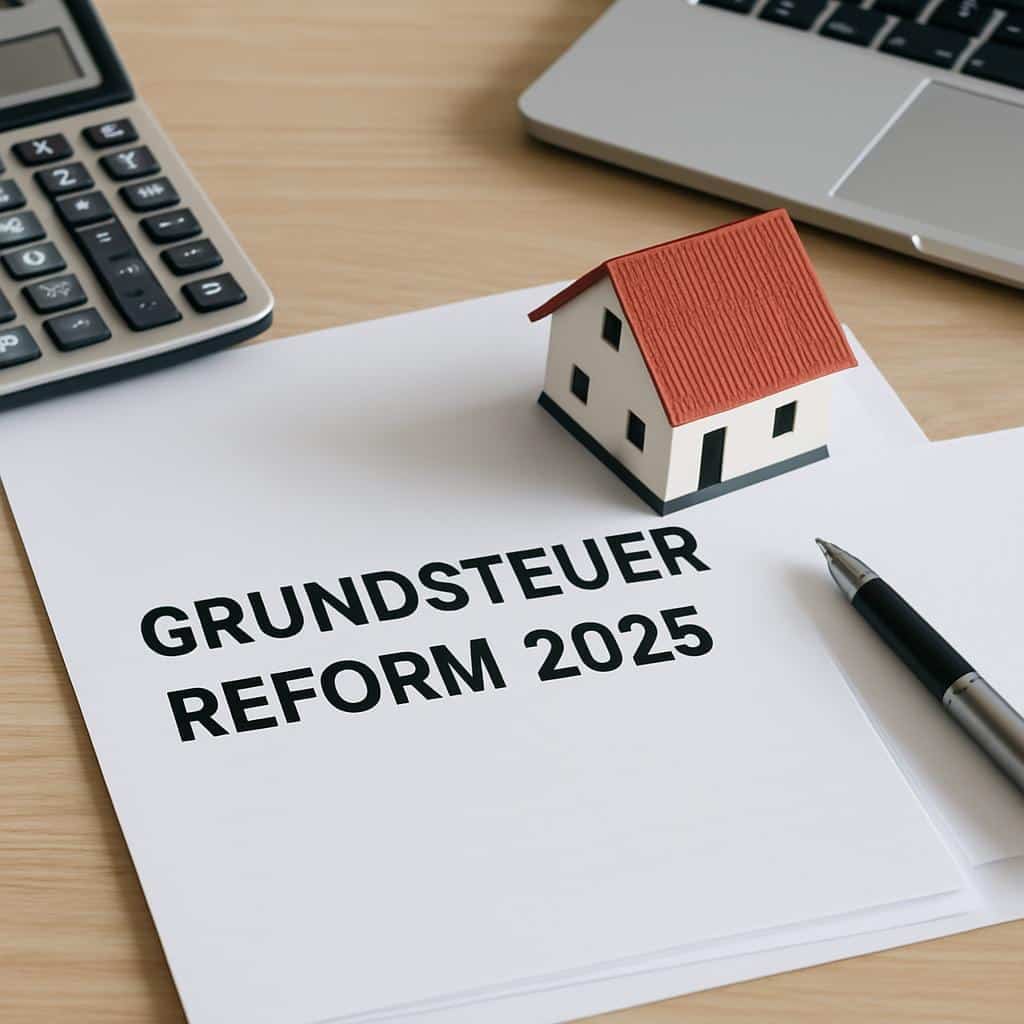
What’s changing from 2025 – in a nutshell
The property tax reform replaces the old standard values with new valuation models. Different approaches apply depending on the federal state (federal model versus state models, e.g. the area-based model). Local authorities are therefore establishing new Rates of assessment firmly, in order to keep the overall volume „more or less“ constant – not for each individual property. The result: there are winners and losers. Inner-city locations in particular with high Land valuation guidelines and prices for blocks of flats may rise; in some outlying areas, prices may fall. In addition, the Property tax C Premiums for undeveloped plots ready for building – relevant for builders and property developers.
Why this directly affects buyers
Property tax is not a „minor matter“. It affects the monthly outgoings for owner-occupiers and the cash flow for investors. Banks are adopting an increasingly conservative approach to their calculations: higher running costs reduce available liquidity and may affect mortgage values or repayment rates. In the case of owner-occupied flats, property tax is passed on via service charges and can affect the property’s lettability (sensitivity to total rent).
- Owner-occupier A realistic budget rather than a „rough estimate“. An extra 20–40 euros a month may seem trivial, but it all adds up over time.
- Investor Even a reduction in yield of just 0.2–0.4 percentage points can undermine the investment thesis – particularly where the initial yield is low.
- Properties under the WEG: Check how the community allocates the property tax (shares of co-ownership, special cases, vacant properties).
- New-build vs. existing property: New valuations may cause properties that were previously „affordable“ to become more expensive, and vice versa.
Quick calculation check (simplified example, assumptions):
85 m² flat in a good part of town. Assumed property tax assessment value: €120 per annum.
Old tax rate: 500% → €120 × 5.00 = 600 € p.a. (€50 per month)
New tax rate: 700% → €120 × 7.00 = 840 € p.a. (€70 per month)
Delta: +€240 per year (€20 per month). With an initial net rental yield of 3 %, this corresponds to a loss in yield of approximately 0.10–0.15 percentage points – depending on the rent and vacancy risk.
Three common pitfalls – and how to avoid them
Misconceptions often arise from average figures or out-of-date assessments. The new property tax takes a more nuanced approach, particularly with regard to location and floor area. Anyone who focuses solely on negotiating the purchase price is missing out on valuable points – because, these days, permanently higher service charges are often negotiable.
Common errors & solutions
- Error: Just look at the purchase price. Solution: Include running costs (property tax, service charges, maintenance) in the monthly payment and ensure they are transparent.
- Error: Carry on calculating based on the latest decision. Solution: Prepare a forecast using the local authority’s current draft tax rate or scenario range (e.g. 600–800%).
- Error: Ignore the specific features of the WEG. Solution: Check the declaration of division, the budget and the latest service charge statement – how is the property tax allocated?
How buyers can check properly now – the 5-point checklist
- 1) Request documents: Property tax valuation data, latest property tax assessment notice, extract from the standard land value register (if available).
- 2) Create tax rate scenarios: Research the local authority’s current or planned tax rate. Vary this by ±100–200 percentage points to see the range.
- 3) Calculate the impact on the budget/return: Calculate the additional monthly charge per 50 basis points of the assessment rate. For investments, recalculate the net initial yield after costs.
- 4) Bring forward your appointment with the bank: Identify the higher property tax as a fixed cost component; test alternative repayment rates/annuity payments.
- 5) Make the most of the negotiations: In the contract of sale, specify, for example, a purchase price adjustment or a one-off settlement should the local authority set the price significantly higher than you had anticipated (have this checked by a lawyer).
Market implications: New scope for pricing
Many sellers still base their calculations on „old“ charges. Buyers who quantify these costs accurately can negotiate precisely: if the expected property tax is significantly higher, the effect can be capitalised. Example: +€240 p.a. additional cost, capitalisation factor 25 (corresponding to 4 %): 6.000 € Negotiable price range – subject to the property and market conditions. In markets where tenants are highly sensitive to total rent, the higher property tax has an indirect effect, as it is more difficult to implement increases in the basic rent. This, too, is a factor in negotiations.
For new-build projects and property developers, it is worth taking a close look at location-related factors (standard land value, floor area ratio). In rural municipalities with moderate tax rates and land-use models, however, the impact may be less significant – presenting an opportunity for buyers to optimise their overall tax burden.
Our service for you: We’ll carry out a property-specific property tax assessment, including a scenario-based calculation and negotiation strategies for your chosen property – quickly, clearly and reliably. Enquire now
Conclusion: Buy in full knowledge of the facts, negotiate more effectively
The 2025 property tax reform is not a deal-breaker – but it does change the rules of the game. Anyone who takes the future tax assessment rate and the valuation methodology seriously will make well-informed purchasing decisions, protect their cash flow and negotiate with confidence. We’ll help you turn figures into arguments and transform risks into manageable variables.
Would you like to know exactly how the property tax reform will affect your target property – and what price or contractual advantages you can realistically negotiate? Get in touch with us. Contact us here for a no-obligation initial consultation and a detailed property tax assessment.