
















The heat pump is regarded as the climate-friendly heating technology of the future – but is it suitable for older buildings? Many owners of existing properties face precisely this question when it comes to energy-efficient refurbishment. The answer is: yes, even older buildings can be heated efficiently using heat pumps – provided the conditions are right and careful planning is carried out.
In this blog post, we explain the technical requirements that should be met, how heat pumps work in conjunction with underfloor heating and insulation, and what common mistakes to avoid. We also showcase successful case studies from the renovation of older buildings.
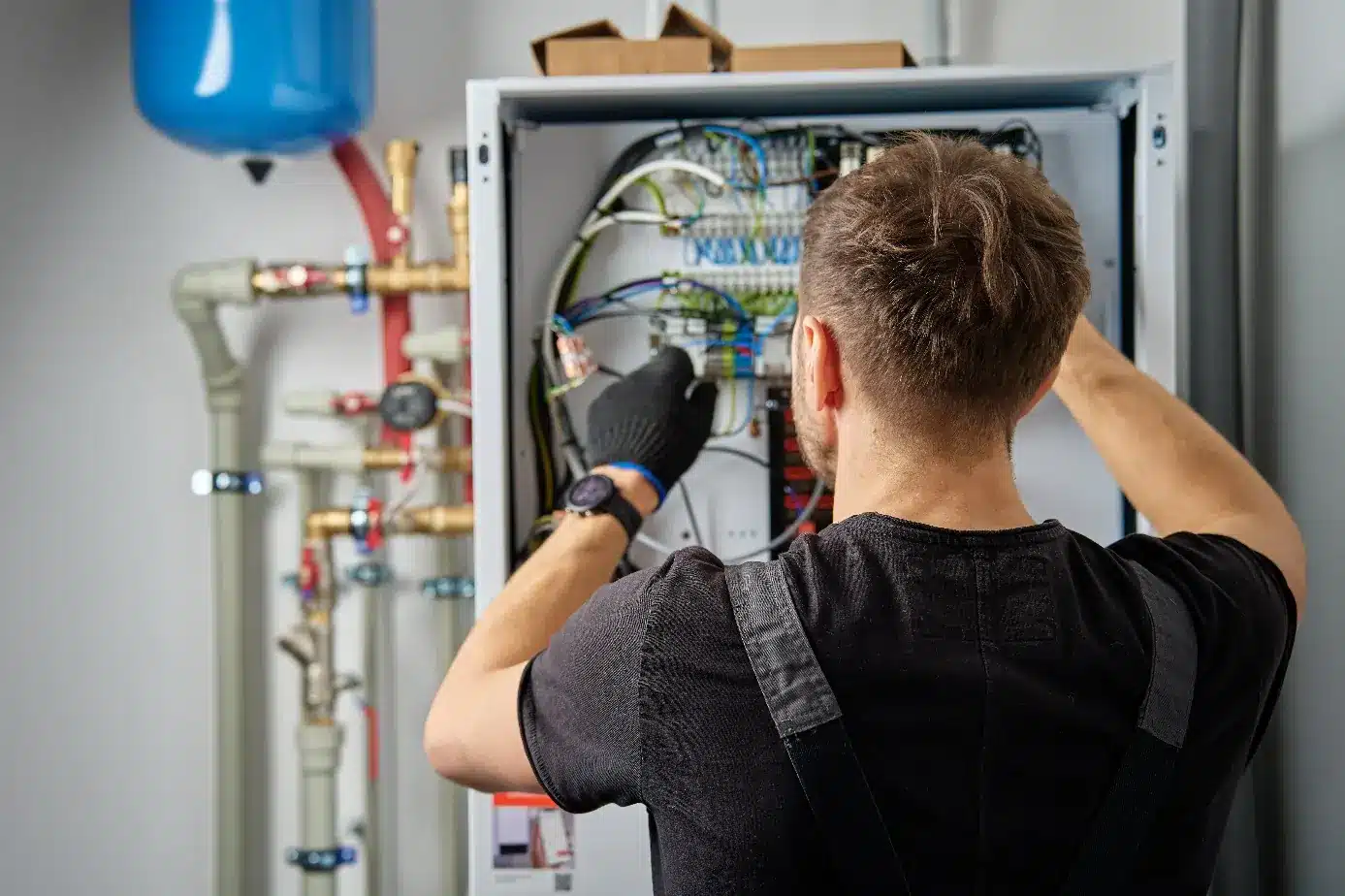
Technical requirements in older buildings – what needs to be taken into account?
Heat pumps are particularly efficient in well-insulated buildings with low flow temperatures – that is, the temperatures at which the heating water flows through the pipes. This is precisely where the challenge lies in older buildings: they often lack adequate insulation, and the radiators require high temperatures to heat the rooms.
The key requirements:
- A good building envelope: External walls, the roof and windows should be as energy-efficient as possible.
- Low-temperature heating system: Underfloor or wall heating systems are ideal; alternatively, modern low-temperature radiators.
- Space for technology: Depending on the type of system, a heat pump requires either an outdoor unit (for air-source heat pumps) or boreholes (for ground-source or water-source heat pumps).
- Hydraulic balancing: This ensures even heat distribution and increases the efficiency of the heat pump.
Anyone who bears these requirements in mind or carries out the necessary retrofitting will lay the foundations for a future-proof, low-emission heating solution – even in older buildings.
2. Combining insulation with underfloor heating – the key to efficiency
In the old building, there is a comprehensive energy-efficiency refurbishment There is virtually no way round it if a heat pump is to be run efficiently. Insulating the building envelope is just as important as the heating surfaces inside.
Insulation:
An uninsulated wall loses heat – and with it, money. Insulating the roof, façade or cellar ceiling can significantly reduce energy consumption, which in turn reduces the heating capacity required from the heat pump. This allows for smaller units and lowers electricity costs.
Surface heating:
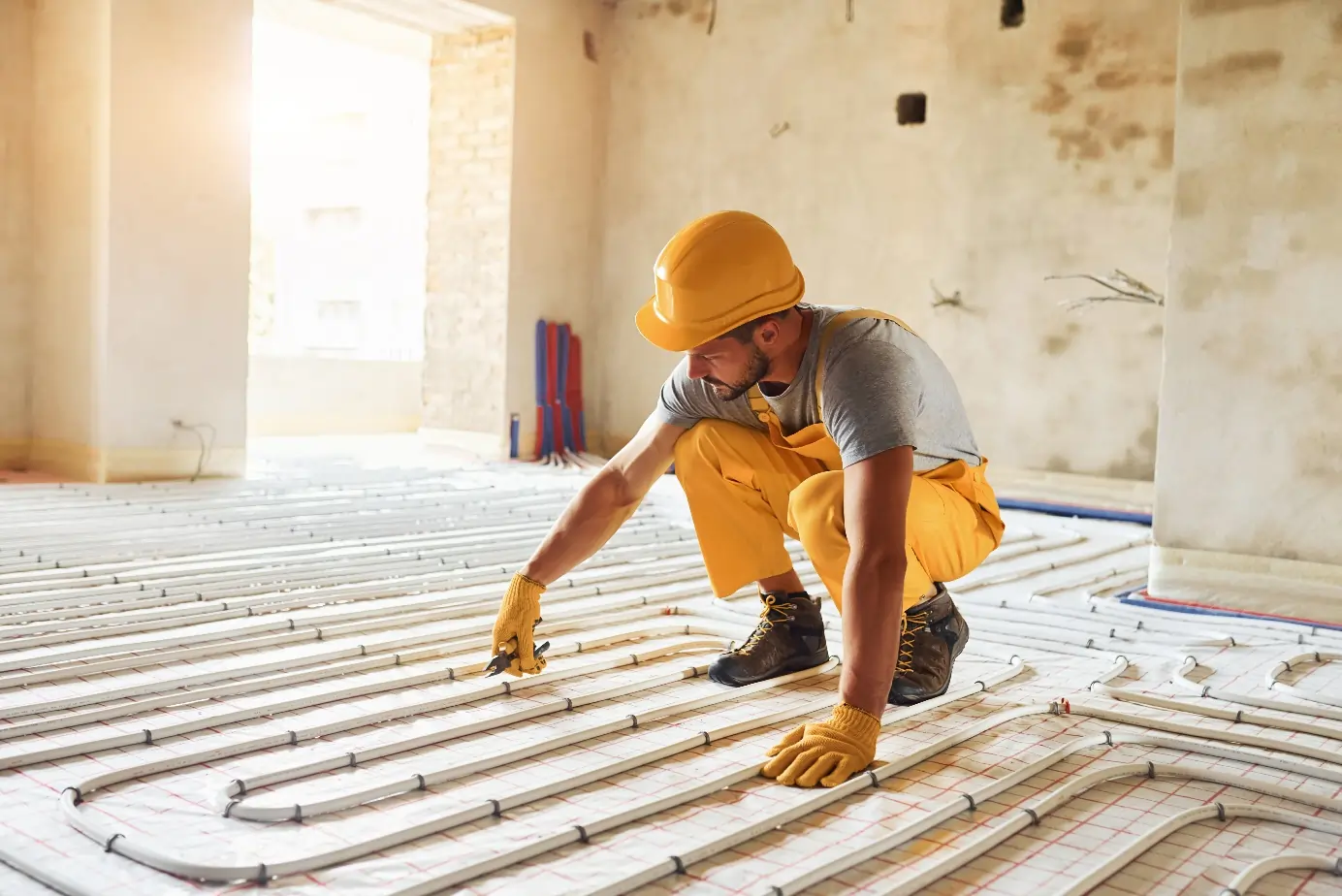
As heat pumps are most efficient when low flow temperatures (between 30–40 °C) In such cases, traditional radiators are often unsuitable in older buildings. Underfloor or wall heating distributes the heat over a large area and requires less energy. If installation is not possible, modern Low-temperature radiators could be an alternative.
Combination:
The refurbishment should a holistic approach ... Anyone who simply installs a heat pump without preparing the building accordingly risks high electricity bills and low efficiency. That is why it often makes sense to combine this with insulation, window replacement and an increase in heating surface area.
Avoiding common mistakes in planning and implementation
To ensure that the conversion to a heat pump in an existing building is successful, the following common mistakes should be avoided:
A heat pump without prior analysis:
Not every house is immediately ready for a heat pump. Energy consultant or specialist planner should carry out a heat demand calculation and assess whether the building requires refurbishment.
No adjustment of the heating surfaces:
Without suitable heating surfaces, efficiency drops rapidly. Old radiators with a high flow temperature are an obstacle to cost-effective heat pump operation.
Incorrect sizing:
Bigger is not better. An oversized heat pump is expensive and operates inefficiently. Careful planning is crucial for cost-effectiveness and longevity.
No funding applied for:
There are attractive incentives available for replacing fossil-fuel heating systems with heat pumps (e.g. BAFA grants of up to 70 %). Anyone who fails to apply for these in good time is throwing money away.

Practical examples: How to make a heat pump work in an older building
Example 1: A Gründerzeit-era house with modern technology
A listed townhouse dating from the Gründerzeit period was given an energy-efficiency upgrade as part of a complete refurbishment: roof insulation, new windows in line with heritage conservation requirements, internal wall insulation – and the replacement of the old gas boiler with an air-to-water heat pump. Combining this with underfloor heating on the ground floor enabled the heat pump to be used efficiently. The result: heating costs reduced by 40 %, living comfort improved, and a subsidy rate of 45 %.
Example 2: A renovated 1960s bungalow
A detached house dating from the 1960s was gradually modernised: the external walls and roof were insulated, the windows were replaced and new radiators were fitted. An air-source heat pump was then installed – in combination with a photovoltaic system on the roof. Thanks to self-consumption and battery storage, the heat pump’s electricity requirements were largely met. The result: a virtually self-sufficient heating supply.
Conclusion: Heat pumps in older buildings – an investment in the future
Retrofitting an old building with a heat pump is not a snap decision, but rather a strategic project that must be carefully planned and implemented. When carried out correctly, homeowners stand to benefit in several ways:
- Climate-friendly heating
- Independence from fossil fuels
- Funding and long-term savings on operating costs
- Increase in the property’s value
With the right combination of thermal insulation, appropriate heating technology and expert planning, the old building will not only become energy-efficient – but also ready for a sustainable future.