












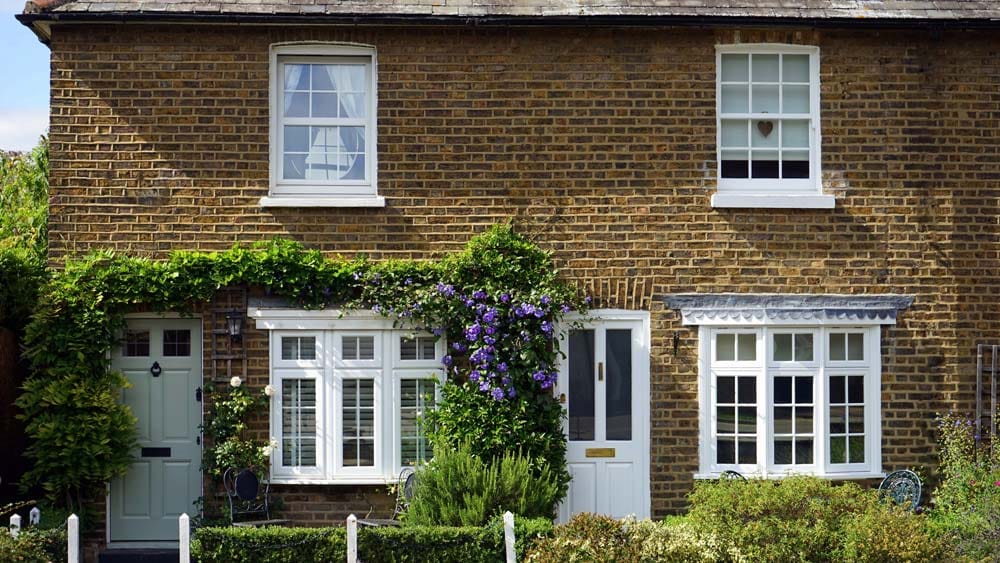



Why property division can make sense
Whether the children have moved out or climbing the stairs every day is becoming a burden - changes in your life situation can mean that your own property is no longer optimally suited to your needs. In such cases, a Property division can be a sensible solution. It opens up new possibilities, makes living more pleasant and can also bring financial benefits. But when is it really worth splitting up and what advantages does it offer?
What is a property division?
In a property division, an existing building or plot of land is divided into several units that can be used or sold separately. This can be done, for example, by converting a detached house into two or more residential units. Alternatively, a large property can also be divided into several plots. These new units can be marketed or utilised independently of each other.
When does property division make sense?
Property division can be advantageous in various situations, including
- After the children move out: If rooms remain unused, the property can be utilised more efficiently by renting out or selling part of it.
- Creating accessibility: For older owners, the property can be adapted to create a barrier-free area, while other parts can be used separately or sold.
- Financial relief: The sale or rental of a subdivided unit can generate additional income to cover maintenance or other expenses.
- Multi-generational living: Property sharing makes it possible for several generations to live under one roof while everyone retains their privacy.
Advantages of property division
There are numerous advantages to sharing a property:
- Flexibility: The property can be adapted to changing life circumstances without the need to relocate.
- Increase in value: Creating separate residential units can increase the overall value of the property.
- Financial stability: By letting or selling a unit, financial resources can be obtained for other projects or retirement provision.
- Sustainability: The efficient utilisation of living space can prevent vacancies and contribute to the creation of urgently needed living space.
Important aspects of the division
Before a property division is realised, a number of legal and technical points should be considered:
- Planning permission: A division generally requires authorisation from the relevant building and planning authorities.
- Declaration of division: When dividing into condominiums, a declaration of division is required that regulates the use and management of the units.
- Technical adjustments: Separate connections for electricity, water and heating are necessary in order to be able to use the units independently.
- Tax aspects: Seek advice from a tax consultant to clarify possible tax implications.
Conclusion: A property division can be a smart solution to make better use of living space, create financial leeway or adapt the property to changing needs. With the right planning and professional support, you can make the most of the benefits and future-proof your property.
More space, more possibilities
Property sharing can be a real relief for older people in particular. A large home that used to be full of life is often felt to be too big in old age. By dividing the property, new utilisation options are created:
- Letting: Additional rental income provides financial relief.
- Family connection: Relatives may be able to move into the new flat.
- Social contacts: New tenants ensure exchange and more security.
Advantages for senior citizens
Property sharing offers many practical advantages for senior citizens:
- New social contacts can help to avoid loneliness.
- Carers could live directly in the house and provide support.
- Safety in everyday life is increased by the presence of other people.
How does a property division work?
For the division of a property, a Declaration of division necessary. This regulates:
- Which areas belong to special property.
- What is allocated to the common property.
- Rights and obligations of the individual parties.
The declaration of division must be notarised and entered in the land register.
Costs and structural requirements
A property division is associated with costs, including
- Notary fees: Around 70 euros.
- Costs for structural adaptations such as sound insulation and separate entrances.
In the long term, these investments can be offset by rental income. Advice from a property expert is recommended here.
Separation of the residential units
Clear demarcation of the flats is essential. Pay attention to this:
- Sound insulation: Minimisation of noise.
- Privacy: Limitation of visual relationships between the residential units.