












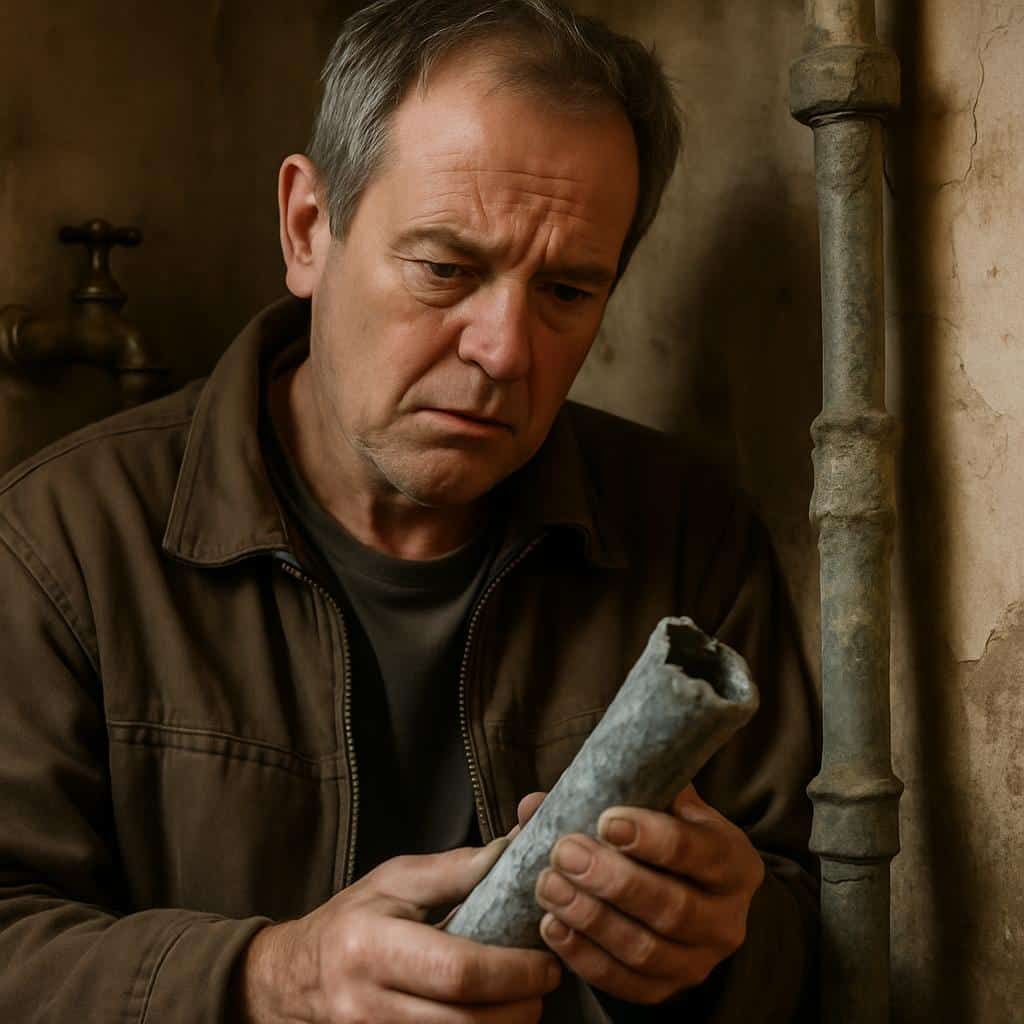



Countdown for drinking water: owners must now replace old lead pipes
Lead pipes in drinking water installations are a double risk: health and economic. For property owners, this means that action is required - and not just when a sale or new tenancy is imminent. The revised Drinking Water Ordinance (TrinkwV 2023) prohibits the use of lead pipes in domestic installations; health authorities can order their replacement. At the same time, EU Directive 2020/2184 sets a prospective reduction of the limit value for lead in drinking water to 5 µg/l (long-term target value). If you take structured action now, you can avoid fines, rent reductions and liability risks - and protect the value of your property.
In short: Lead pipes belong out. Owners should check and document inventories, commission a laboratory analysis and schedule the replacement. This creates legal certainty and is a sales argument.
What is changing legally - and why is 2026 an important marker?
With the Drinking Water Ordinance 2023, the use of lead pipes in domestic installations is no longer permitted. In practice, this means that if lead pipes are detected or limit values are exceeded, the local health authorities can set deadlines and order measures to be taken. Many local authorities communicate 2026 as the target date for complete replacement (status: assumption based on current administrative guidance). At the same time, the EU directive is tightening the requirements for material hygiene and providing information about a lower target value in the long term. Result: The pressure is increasing - nationwide.
Health, liability, property value: the three levers
Health: Lead can dissolve from old pipes and impair the development of children in particular. A limit value of 10 µg/l already applies today; in the future, the assessment will be even stricter. Liability: Landlords must ensure that the drinking water is safe to drink. Failure to do so may result in rent reductions and official requirements. property value: When selling, lead pipes are a deal-breaker: buyers calculate replacement costs plus risk premiums - the price reduction is often higher than the clean renovation.
How to recognise lead pipes in practice
An initial visual inspection is quickly completed - verification is carried out by a laboratory.
- Year of construction check: Buildings with initial installations before around 1973 are suspect; in individual cases, lead pipes were replaced until the 1980s, but rarely newly installed.
- Material test: Lead is matt grey, soft and non-magnetic. When lightly scratched, the cut surface has a silvery lustre. Caution: do not use force.
- Shape/connections: Often thicker, softly bent pipes with bulging sockets; no screwed fittings as with copper or stainless steel.
- Check cellar and house connection: The critical section is often the pipe from the house connection to the distributor.
- Labelling: „Pb“ stands for lead. Missing labelling is not an all-clear signal.
Quick check and laboratory analysis
Test kits (e.g. sampling bottles with laboratory dispatch) are a good guide. Experience has shown that serious analyses cost 40-80 euros per sample. Important: Do not rinse before taking the sample - the Stagnation sample (water that stood overnight) shows the realistic exposure in everyday life.
Mini calculation example: A detached house requires 2-3 samples (kitchen/bathroom, possibly house connection): approx. 120-200 euros. If lead is detected, the analysis pays off immediately - it enables targeted planning and saves discussions when selling or renting.
Planning an exchange: 5 steps to a legally compliant solution
- 1) Documentation: Visual inspection, photos, mark floor plan. Check old building files (year of construction, refurbishments).
- 2) Analysis: Arrange for laboratory sample(s), archive results. If exceeded: inform tenant and contact Health Office if instructed.
- 3) Specialised planning: Involve a specialised sanitary company and - for larger houses - a technical building services planner. Select the material (stainless steel, copper, multi-layer composite) according to the water quality.
- 4) Offers/Timing: At least three offers, including restoration (plaster, tiles). If possible, coordinate the work with the flat files and replacement supply (standpipe/temporary).
- 5) Acceptance/verification: Leak test, flushing, renewed laboratory analysis. Document everything in an audit-proof manner - important for sales, financing and letting.
What does the replacement cost - and is there a subsidy?
The range is wide and depends on cable lengths, accessibility and surfaces. Realistic empirical values:
- Detached house: roughly 3,000-10,000 euros for indoor pipes if shafts are available and surface-friendly dismantling is possible.
- Apartment block (8-12 units): roughly 20,000-80,000 euros, depending on the number of strands, climbing zones and restoration.
Subsidies: There are a few municipal programmes (keyword „drinking water hygiene“, „renovation of old buildings“). As the landscape is heterogeneous, it is advisable to enquire with the local authority/supplier before placing an order. Maintenance costs and tradesmen's services may be relevant for tax purposes (after individual consultation with a tax professional).
Typical errors & solutions
- Error: Only replace individual parts and leave old lead parts in the system. Solution: Replace all lead lines consistently, including stub lines.
- Error: Material selection without water analysis. Solution: Match the material to the water chemistry (e.g. pH value, conductivity), observe manufacturer's approvals.
- Error: No final analysis. Solution: Laboratory sample as proof after completion - protects against disputes and secures the property value.
- Error: Insufficient communication with tenants. Solution: Announce appointments early, clarify replacement supply, coordinate access.
Why speed pays off
A documented, professional replacement is a strong selling point: banks and buyers honour the legal certainty and ongoing lettings remain trouble-free. Those who wait often pay twice - with higher construction costs (rush orders), rent reductions and price discounts when selling.
Our tip from marketing practice: Combine the line change with measures that are due to be carried out anyway (bathroom renovation, line renovation, smart metering). This saves construction site costs and reduces tenant losses.
Would you like to secure the value of your property and act with legal certainty?
We check documents, recommend experts, calculate in line with the market and position your property in the best possible way - with reliable documentation for buyers and banks. Arrange an initial consultation now.