








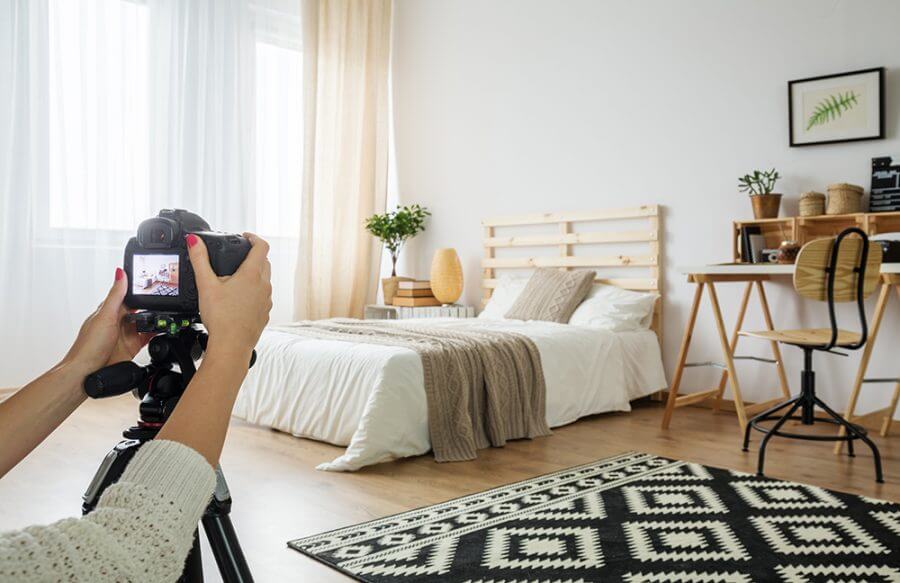



Perfect property photos: How to present your property in the best possible way
First impressions count - even when marketing your property. High-quality photos can make all the difference: they attract serious potential buyers, avoid unnecessary viewings and help you achieve a better price. Use our tips to present your property in the best light.
1. tidy rooms create clarity
A tidy impression makes it easier for prospective buyers to visualise. Cluttered rooms are distracting and distracting. Experts recommend removing personal items such as clothing or photos before taking pictures. Test photos can help to recognise and eliminate distracting details.
2. make optimum use of lighting conditions
Bright rooms look inviting. Make sure to open curtains and blinds to let in as much natural light as possible. However, avoid direct sunlight as this can lead to overexposure. With a professional camera, you can regulate the amount of light using the aperture and shutter speed to ensure perfect results.
3. choose the right perspective and lens
- Camera alignment: Hold the camera straight to avoid distortion and „falling lines“. Take photos from a height of around one metre to obtain a realistic image of the rooms.
- Wide-angle lenses: These are ideal for getting as much space as possible in a photo. However, make sure that the rooms are not shown too large, as this can create false expectations.
4. post-processing with a sure instinct
Minor adjustments, such as rectifying lines or adjusting brightness and contrast, can perfect a photo. However, avoid excessive editing, as over-optimised images can cause scepticism among prospective customers.
Conclusion: Faster to success with good photos
High-quality property photos are the key to a successful sale or letting. Not only do they help to attract the right potential buyers, they can also increase the perceived value of your property.
Get non-binding advice now

Robert Schüßler
Property valuer (EIA and IHK)
Note: This text is for information purposes only and does not constitute legal or tax advice. Please consult an expert if you have individual questions.