












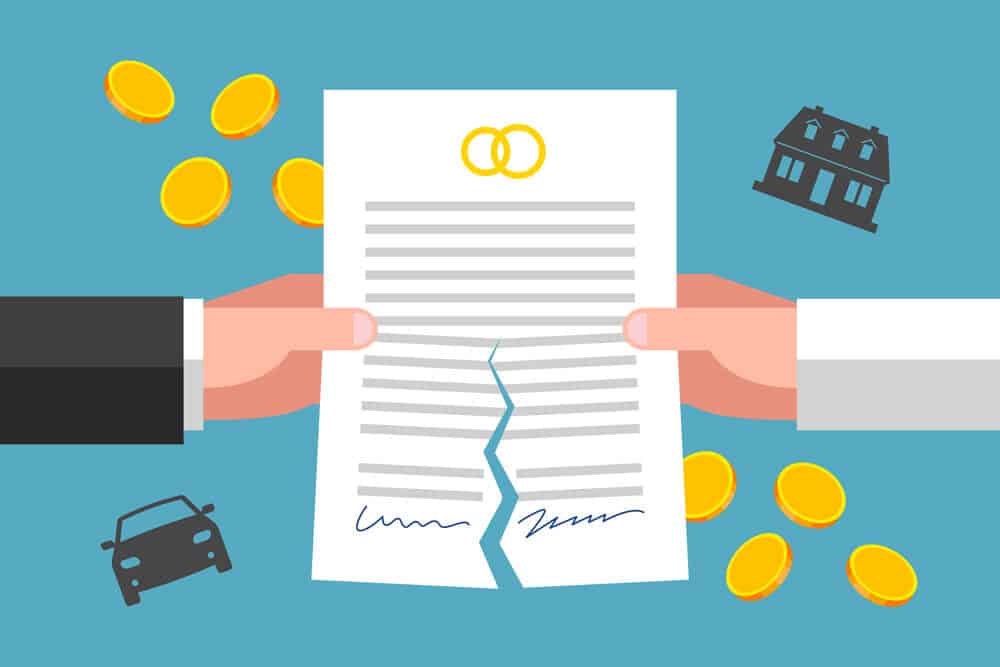



Divorce and real estate: How to optimise the division of property?
Divorce not only brings great emotional challenges, but also poses financial and legal questions for property owners. How do you divide the joint property? And above all: How do you end joint loans and obligations? Here are possible scenarios and solutions.
Case 1: Only one partner is liable for the loan
If only one spouse has signed the loan agreement, they alone are liable to pay - regardless of whether the other partner is listed in the land register. In this case, there are several options:
- Acquisition of the property: The financing partner can take over the property in full.
- Rent equalisation: If the other partner remains living in the property, this can be compensated for by rent payments or an adjustment to maintenance.
- Equalisation claims: If one partner pays the debts alone and leaves the property to the other, claims for compensation can be asserted.
Case 2: Both partners are liable for the loan
If both partners have signed the loan agreement, they are equally liable - even if one of them no longer benefits from the property. The following solutions are conceivable:
- Loan rescheduling: With the bank's consent, the loan can be transferred to a partner. However, this depends on the goodwill of the bank.
- Indemnification: One partner takes over the payments, while the other is released. However, the liability towards the bank remains.
- Maintenance regulation: Loan instalments can be deducted from one partner's salary, which influences the maintenance calculation and ensures that both partners participate.
Why a professional estate agent can help
In complex divorce situations, an experienced estate agent can provide valuable support. He knows the market conditions, helps with the valuation of the property and finds fair solutions for the division of property. In this way, conflicts can be minimised and optimal results achieved.
Click here for the contact form

Robert Schüßler
Property valuer (EIA and IHK)
Further information:
Legal notice: This article does not constitute tax or legal advice in individual cases. Please clarify individual circumstances with a lawyer or tax advisor.
Photo: © vaselena/Depositphotos.com