
















Area deviation in rented flats: Why a few centimetres can now be expensive
A few centimetres too much or too little may sound harmless - but in tenancy law they can quickly add up to four to five-figure sums. Whether ancillary costs, rent increases or the marketing of a flat: the correct living space is the linchpin. If you work properly here, you can avoid disputes, additional payments and damage to your image. In the following, you will find out why area deviations are so critical, which standards apply, how to carry out a quick plausibility check and which mistakes can be elegantly avoided.
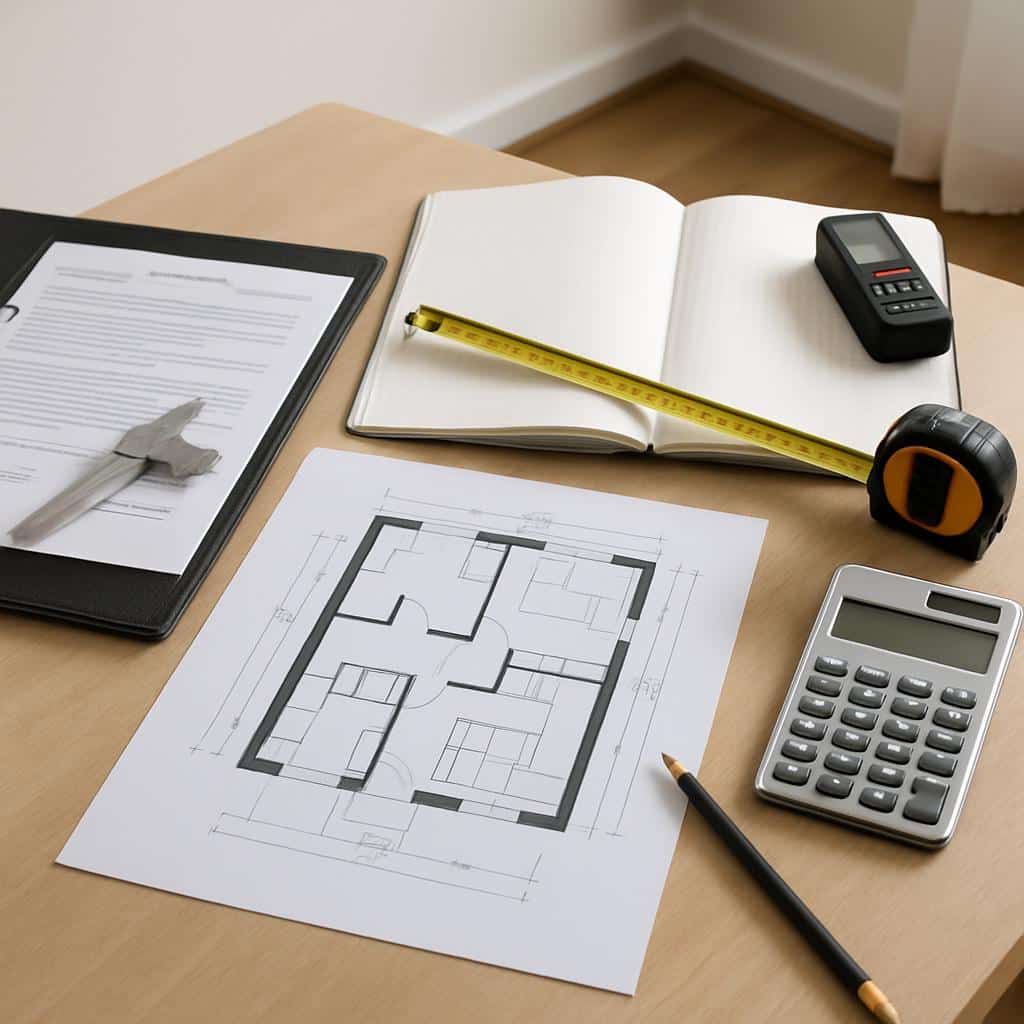
What exactly is „living space“ - and what rules apply?
In tenancy law, the living space is predominantly determined by the Living Space Ordinance (WoFlV) calculated. It differentiates strictly according to the usability of the areas: Rooms with Sloping roofs count as 100 % from a standing height of 2.00 m, 50 % from 1.00-2.00 m, and not at all under 1.00 m. Balconies, loggias, terraces are generally recognised at 25 % to 50 % (depending on the individual case, location/quality). Basements, boiler rooms and garages are not considered living space.
In addition, there is the DIN 277, which is frequently used for project development, new construction and commercial use. It forms Gross floor space and usable areas and regularly leads to larger figures than the WoFlV. For Rented flats however, the WoFlV is usually decisive - unless otherwise agreed in the contract. This is precisely where discrepancies arise: If DIN 277 is used for marketing but the WoFlV is used for invoicing, a conflict arises.
Legal framework: The 10% rule of the BGH
The case law (BGH) has a clear guard rail: If the actual living space deviates by more than 10 % from the contractually agreed living space, this constitutes a defect. This also applies to „approximate figures“. Consequences:
- Rent reduction in the amount of the percentage deviation is permissible.
- Reclaim overpaid rent (regularly up to 3 years retrospectively, note limitation periods).
- Ancillary costs and Rent increases (index/rental index) may be based on an incorrect area - with risks of reversal.
Landlords and property managers are therefore obliged to provide reliable documentation of floor space details. On the tenant side, a factual check is worthwhile, especially for sloping ceilings, conservatories and balconies.
Quick check of living space (plausibility in 5 minutes)
1) Note the contractual area. 2) Refer to the floor plan/division plan. 3) Consider pitched roofs, alcoves, balconies separately (WoFlV logic). 4) In case of deviation: Measure random sample (e.g. living room, largest room). 5) Is there a difference of ≥8-10 %? Then commission a professional living space calculation.
Concrete calculation examples: When will it be expensive?
Example A: Contract: 80 m²; Actual: 74 m². Deviation = 6 m² = 7.5 %. Consequence: As a rule, no automatic rent reduction above the 10% threshold, but a high level of attention. The difference can still be noticeable in the event of rent increases or operating costs.
Example B: Contract: 80 m²; Actual: 71 m². Deviation = 9 m² = 11.25 %. Consequence: The tenant can reduce the rent by 11.25 % and reclaim overpaid rent (subject to the statute of limitations). At €1,200 warm rent (€900 cold rent), this quickly results in a repayment risk of several thousand euros, plus corrections to the operating costs.
Example C (balcony/terrace): Contractually 10 m² balcony fully recognised; WoFlV usually 25-50 %. If the balcony is incorrectly counted as 100 %, 5-7.5 m² „too much“ can end up in the living space - often the trigger for the 10% threshold.
Typical errors & solutions
Error: DIN 277 in exposé, WoFlV in rental agreement - tenant ends up paying for „wrong“ area. Solution: Specify standardised basis; use WoFlV for residential rents.
Error: „approx.“ specification as a free ticket. Solution: „approx.“ does not protect against >10 % deviation; enclose a reliable measurement.
Error: Roof pitches ignored. Solution: 1-2 m height = 50 %, below 1 m = 0 %; document cleanly.
Error: Balcony flat rate 50 % without inspection. Solution: Consider quality, location, usability; justify common corridor 25-50 %.
Effects on ancillary costs, index-linked rent and rent index
The living space influences the Distribution of operating costs (e.g. property tax, house cleaning, administration depending on the agreement). Too much space regularly leads to excessive charges. Also Index-linked rent and Rent increase according to rent index are based on the living space; if this is incorrect, requests for increases can be challenged. For owners, this means that correcting their figures now will prevent expensive corrections and legal disputes in the future.
Practical tips for landlords and tenants
- Clear reference standard: Explicitly state „Wohnflächenverordnung (WoFlV)“ in the tenancy agreement, if appropriate.
- Check documents: Floor plan, declaration of division, measurement protocol; in the case of old buildings, pay attention to slopes and recesses.
- Professional measurement: In case of doubt or conversions, have an up-to-date survey carried out - legally documented.
- Exposé ≙ Contract: Figures in the exposé must match the contractual area; otherwise there is a risk of loss of trust and liability.
- Adjust operating costs: After correcting the area, update the allocation keys continuously.
- Communication: Explain deviations openly, explain the calculation method - this defuses conflicts.
Marketing and returns: precision as a competitive advantage
Precise surfaces are not an end in themselves, but make good business sense. They create Traceability and prevent objections in the later contractual phase. For sellers, a reliable land survey increases the Transparency and thus the speed of marketing. For landlords, the risk of subsequent claims and reversals is reduced. And: a correct area basis allows legitimate rent increases to be enforced safely - without a target.
Have your living space checked now
Secure your rent, ancillary costs and marketing with a reliable living space calculation. We organise measurements, documentation and legally compliant classification.
Conclusion: Area deviations are not a detail - they determine rent reductions, additional payments and the legal stability of your tenancy. If you apply the WoFlV, measure accurately and document clearly, you are acting in an economically smart way and minimising risks. We will be happy to check your documents, coordinate a measurement and assist you in communicating with tenants - quickly, precisely and discreetly. Make an appointment for a non-binding initial consultation here.